
Received or recieved: which one do you type before you hit send? The red squiggle appears, and a simple word suddenly feels like a trick question. Relax. Received is the correct spelling, every time. This guide shows you why, so the mistake never sneaks into your emails, resumes, or text messages again.
Quick Answer
Received is the correct spelling. Recieved is a common misspelling and does not exist in any standard English dictionary.
The reason is the old spelling rule “i before e, except after c.” The letter c comes right before the vowel pair in this word, so the e goes first: received.
If you only needed the answer, you can stop here. If you want to stop making this mistake for good, keep reading.
Received Word
“Received” is the past tense of the verb receive. It also works as the past participle, which means it pairs with helpers like “have” and “was.”
Here is how the word changes across forms:
- Receive (base form): “I receive one newsletter a day.”
- Receives (third person): “She receives dozens of emails.”
- Receiving (present participle): “He is receiving a award tonight.”
- Received (past tense and past participle): “We received your package.”
Notice that every form keeps the same “ei” pairing. The spelling never changes, only the ending does.
| Explore More Articles |
| Pricey or Pricy? Discover the Correct Spelling |
| Family’s or Families? Learn the Correct Use Today |
| To or Too? Easy Rule to Get It Right Every Time |
Meaning and Definition of Each Word (Received or Recieved)
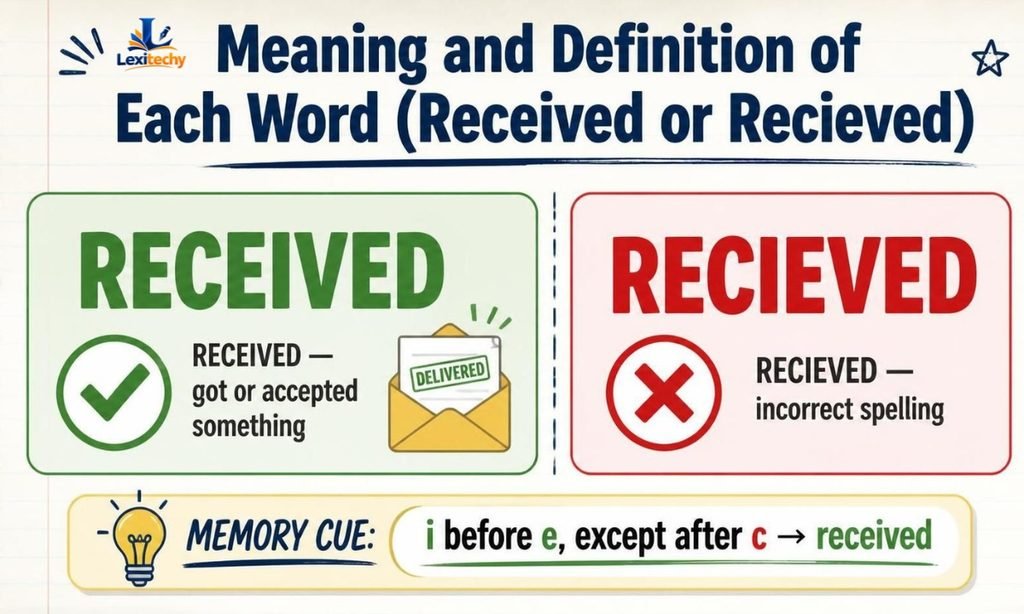
Now that you know the verb, let’s see what each spelling actually means. One carries meaning. The other carries embarrassment.
1. Received
Received means you got, accepted, or took in something. That something can be physical, like a gift, or abstract, like news, praise, or criticism.
Dictionaries also list a few extra senses. People receive guests, which means they welcome them. A show can be well received, which means audiences liked it. A signal can be received, which means a device picked it up.
2. Recieved
Recieved has no meaning because it is not a word. It is a typo that happens when fingers and memory disagree about which vowel goes first.
You will never find it in a dictionary entry as a valid variant. It also has no regional excuse, which we will cover shortly.
Recieved or Received Meaning
Only one of these two words carries a meaning, and it is “received.” When someone writes “recieved,” readers still understand the intended word, because context fills the gap.
Understanding is not the same as approval, though. A misspelling in a job application can make a hiring manager pause. A misspelling in a school essay can cost marks. Your reader knows what you meant, but your credibility takes a small hit.
Think of it like showing up to a meeting with your shirt buttoned wrong. People will still listen, but they will notice.
Key Differences Between “Recieved” and “Received”
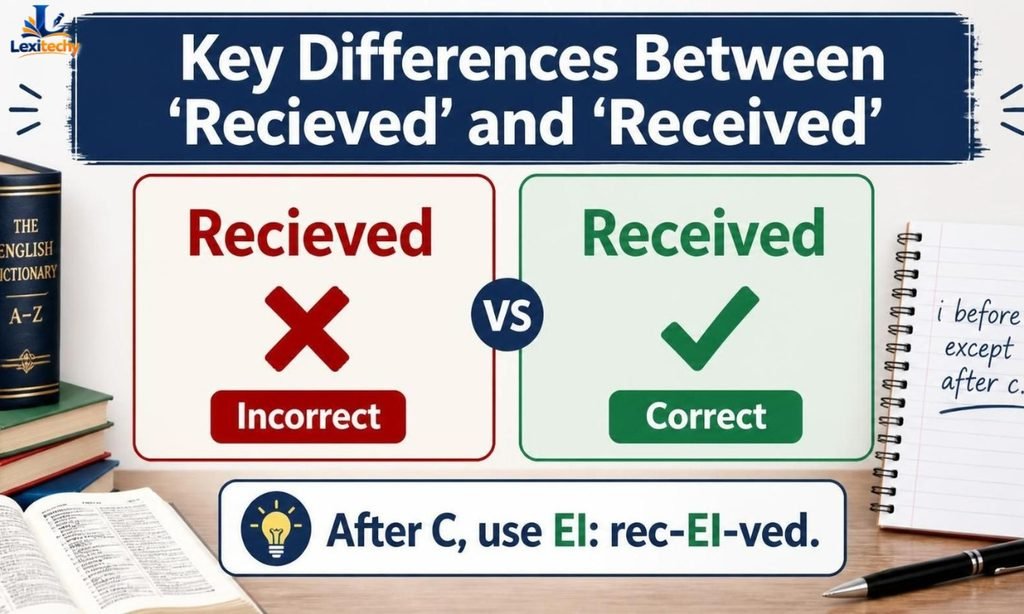
The differences are short and simple:
- Correctness: Received is standard. Recieved is wrong.
- Dictionary status: Received appears in every major dictionary. Recieved appears in none.
- Letter order: Received uses “ei” after c. Recieved wrongly uses “ie.”
- Spell checker result: Received passes. Recieved gets a red underline.
- Professional impact: Received looks polished. Recieved looks rushed.
Only one letter pair separates them, which is why the mistake feels so small and so common.
Received Spelling Meaning
Spelling has its own logic, so let’s break the word into parts. Received has three pieces: re + ceive + d.
The prefix “re” means back or again. The root “ceive” comes from a Latin word meaning to take. The ending “d” marks the past tense.
Put them together and you get “taken back” or “taken in,” which matches what receiving actually means. Once you see the word as three building blocks, the “ei” inside “ceive” feels less random.
Recieved or Received Synonym
The misspelling has no synonyms, because a word that does not exist cannot have relatives. What you can do is replace “received” with stronger options when your writing feels repetitive.
Common synonyms for received include:
- Got
- Accepted
- Obtained
- Collected
- Gained
- Welcomed
Your next step is choosing the right one, because they do not all fit every sentence.
Received Spelling Synonym
Context decides which synonym works. Picking the wrong one sounds odd, like saying you “obtained” a hug.
- Emails and messages: got, was sent, had delivered. “I got your message.”
- Gifts and payments: accepted, collected, was paid. “She collected the award.”
- Guests and visitors: welcomed, greeted. “The host welcomed us at the door.”
- Feedback and news: heard, took in, learned. “He learned the results on Monday.”
Formal writing leans toward “received” and “obtained.” Casual writing prefers “got.” Matching tone to audience matters more than showing off vocabulary.
How Do You Spell Receive in Spanish
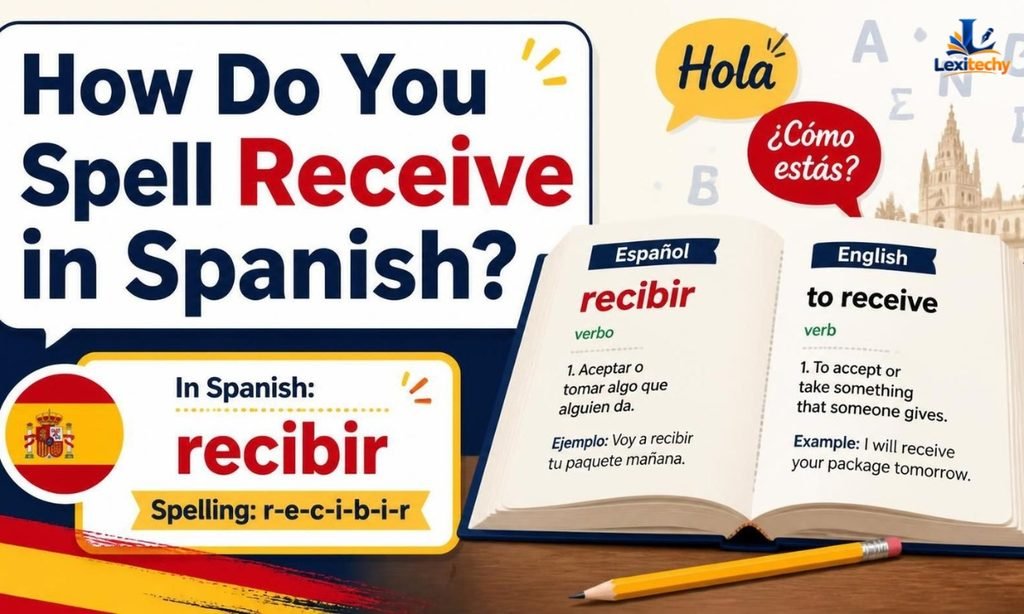
Many readers search this because they study both languages. In Spanish, the verb is recibir, and the past participle for “received” is recibido.
The Spanish version follows a different pattern. It uses “ib” in the middle, with no “ei” pair at all.
So the confusion stays inside English. If you find English spelling messy, Spanish politely agrees and offers you a cleaner system.
Recieved or Received Which Is Correct
Received is correct. Every major dictionary, style guide, and spell checker agrees on this.
No one has to vote on it, and no one gets to decide it is “close enough.” Writers, editors, and teachers treat “recieved” as an error in every context, formal or casual.
That settles the debate. The next question is why you keep seeing the wrong version online.
Received or Recieved
You will spot “recieved” in text messages, social media posts, and rushed emails. Autocorrect sometimes catches it. Sometimes it does not, especially when you type fast or on a small phone screen.
Search engines also notice the confusion. Millions of people type the misspelling into search bars, and tools silently correct it. That convenience hides the mistake from many writers, so they never learn the correct form.
Do not rely on a machine to rescue you. Learn the rule once and you will never need rescuing.
Recieved or Received Examples
Here are quick examples that show the right and wrong forms side by side:
- Wrong: “I recieved your letter yesterday.”
- Right: “I received your letter yesterday.”
- Wrong: “Have you recieved the invoice?”
- Right: “Have you received the invoice?”
- Wrong: “The team recieved good news.”
- Right: “The team received good news.”
Read them aloud and the sound is identical. That is exactly why only your eyes can catch the error.
Comparison Table
| Feature | Received | Recievd |
| Correct spelling | Yes | No |
| Found in dictionaries | Yes | No |
| Letter pattern | c + ei | c + ie |
| Part of speech | Verb (past tense) | None |
| Safe for formal writing | Yes | No |
Keep this table in mind next time you doubt yourself.
Examples in Sentences
Seeing the word in real contexts helps it stick. Here are sentences from everyday life:
- Work: “We received your application and will reply this week.”
- Shopping: “I received my order two days early.”
- School: “The students received their grades on Friday.”
- Money: “She received a payment of $500 for the project.”
- Feelings: “The speech was warmly received by the crowd.”
- Passive voice: “The package was received at the front desk.”
Notice that the spelling stays the same whether the sentence is formal or casual. The word does not change its outfit for different occasions.
Receive Believe Spelling
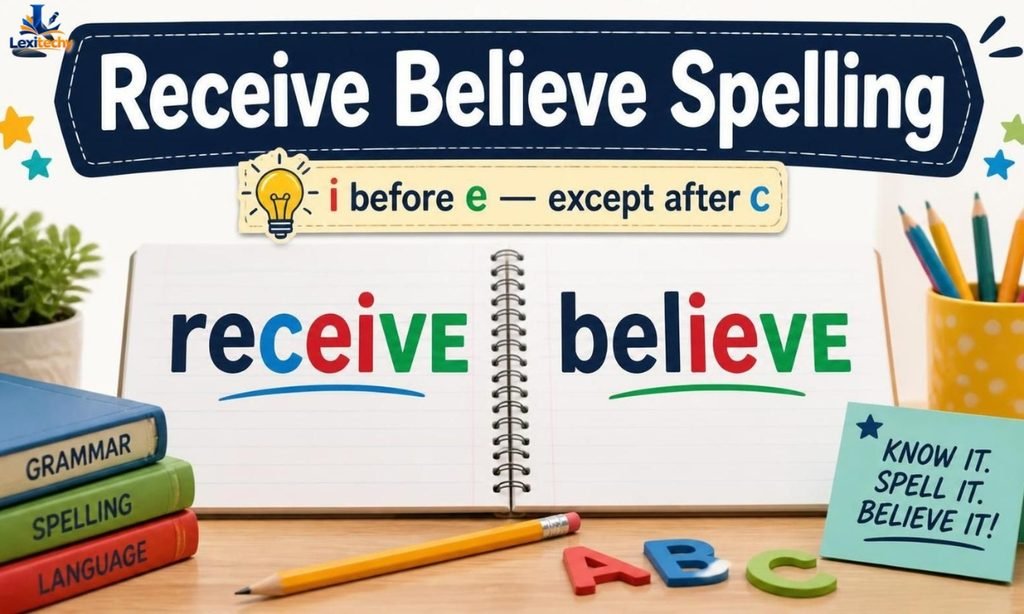
People often get stuck because “believe” and “receive” look similar but follow opposite orders. Believe has “ie.” Receive has “ei.”
The classic rule explains both words. Use i before e, except after c. Believe follows the main rule, because no c comes before the vowels. Receive follows the exception, because c comes first.
Here is a short comparison to lock it in:
- Believe, relief, field, niece: ie after most letters
- Receive, ceiling, deceive, perceive: ei after c
Think of the letter c as a bossy bouncer who makes the e walk in first.
Why Is Receive Spelled That Way
The spelling traces back through French. English borrowed the word during the Middle English period from Old French, which took it from the Latin recipere, meaning to take back.
French spellings shaped the “ei” pattern, and English kept it even after pronunciation changed. English is famous for holding on to old spellings long after the sounds moved on. That is why the word looks stranger than it sounds.
The “i before e, except after c” rule grew later as a teaching shortcut for exactly these tricky words. It has well known exceptions, like “weird” and “seize,” but the rule works perfectly for “receive” and its family.
Receive American Spelling
Here is some good news. American English and British English spell this word the same way. You do not need to choose between two versions.
Other words are split by region, like “color” and “colour,” or “center” and “centre.” “Receive” is not one of them. Canada, Australia, and the UK also use “received.”
So no regional excuse exists for “recieved.” If you see it anywhere in the English speaking world, it is an error.
Common Mistakes
Writers mix up this word in several predictable ways. Watch for these:
- Recieved: swapping the e and i (the most common error)
- Recived: dropping the e before the v
- Receeved: doubling the e by accident
- Reciept: the same swap in the related word “receipt”
The last one deserves attention. If you misspell “received,” you probably misspell “receipt” too, because they share the same trap.
A quick proofreading habit helps. Search your document for “ie” and check every hit after a c.
Tips to Remember the Difference
A good memory trick beats a good rule, because you can recall it in two seconds. Try these:
- The CEI trick: Remember the word “ceiling.” It has cei, just like receive.
- The bouncer trick: After c, the e always enters first.
- The family trick: Learn the group together: receive, deceive, perceive, conceive.
- The chant trick: Say “r-e-c-e-i-v-e” aloud once a day for a week. You will feel silly, but you will not forget.
Pick one and use it. You do not need all four, unless you enjoy feeling thorough.
When to Use Each Word
This section is short because the answer is simple. Use received in every situation. Skip recieved in every situation.
Received fits emails, essays, legal documents, résumés, texts, and captions. No setting exists where the misspelling is acceptable.
If you ever wonder “Which one should you use?” the answer never changes. When your brain says “recieved,” your fingers should still type “received.”
Grammar Rules Related to “Received”
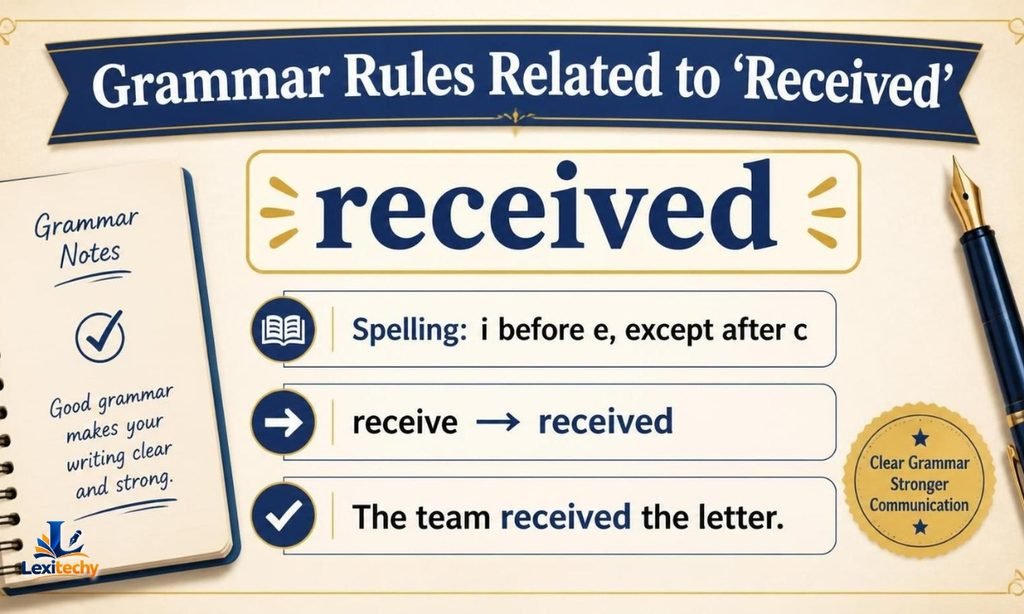
Knowing the grammar helps you use the word with confidence. A few key rules apply:
- Past tense: “I received the message.” No helper verb is needed.
- Present perfect: “I have received the message.” Use “have” or “has” plus received.
- Passive voice: “The message was received.” The receiver is the subject.
- As an adjective: “The received wisdom says to save early.” Here it means widely accepted.
One fun fact: “Received Pronunciation” is the name for a traditional British accent. The spelling stays the same even in that title.
Synonyms or Related Words
Words from the same family share the same Latin roots, and some follow the same spelling pattern. Here are useful relatives:
- Receiver: a person or device that receives
- Receipt: proof that you received something (the p stays silent)
- Recipient: the person who receives
- Reception: a welcome, or the quality of a signal
- Receptive: open to new ideas
Spot the odd one out? “Reception” and “receptive” drop the “ei” pair entirely and use “ep” instead. So the pattern is not universal, which is why English keeps teachers employed.
Frequently Asked Questions (FAQs)
Why is it received and not recieved?
Because the letter c comes right before the vowel pair, and the rule says the e goes first after c. The word also arrives from French and Latin roots that shaped the “ei” pattern. Dictionaries have never accepted the other order.
Is it correct to say received?
Yes. “Received” is correct in every setting, from casual texts to legal contracts. It is the standard past tense of “receive.”
How do you spell “received” in the UK?
The UK spelling is the same: received. British and American English share this spelling, so no regional differences apply.
What does received mean?
Received means you got, accepted, or took in something. That can be a gift, a message, news, a payment, or even a guest at your door.
Conclusion
The answer is clear: received is correct, and recieved is a spelling slip. Remember that c bosses the vowels, so e goes first after it. Practice with “ceiling,” “deceive,” and “perceive,” and the pattern will feel natural.
Next time the red squiggle shows up, you will know exactly what to do. Fix it, send your message, and move on with your day.

Emily Carter is an English content writer and SEO specialist with 5 years of experience in creating clear, helpful, and search-friendly content. She writes about grammar, word meanings, synonyms, vocabulary, and everyday English usage. Her goal is to make confusing words and language rules simple, practical, and easy to understand.


Pingback: Goodnight or Good Night? Discover the Correct Spelling
Pingback: Verbage or Verbiage? Discover the Correct Word