

Sometimes “I’m not feeling well” is the right thing to say. Other times it sounds too vague for a work email, or too stiff for a text to a friend.
This guide gives you 28 alternatives, grouped by tone and strength, so you can pick the one that fits your situation. The list runs from formal to casual, and each phrase comes with an example you can adapt.
Quick answer: The most professional ways to say “I’m not feeling well” are “I’m unwell,” “I’m not feeling my best,” and “I’m dealing with a health issue.” Use “I’m under the weather” for a mild illness, and “I’m too ill to work” when you clearly cannot do your job. Choose the phrase that matches how sick you are, how formal the setting is, and how much you want to share.
What “I’m Not Feeling Well” Means
“I’m not feeling well” is a general statement that your body, and sometimes your mind, is not in good shape. It does not name the cause, the severity, or how long it will last. That vagueness is useful because it protects your privacy, but it can also leave the listener unsure what you need.
People mostly use it in five situations:
- Telling a manager or teacher you cannot work or attend
- Leaving a meeting, event, or plan early
- Answering “How are you?” honestly
- Warning others that you may be getting sick
- Explaining why your performance is off today
Most readers searching for this phrase want wording they can copy into a message. So the sections below focus on tone, strength, and context.
| Don’t Miss These Posts |
| Chris’s or Chris? Learn the Correct Usage Fast |
| Pricey or Pricy? Discover the Correct Spelling |
| Family’s or Families? Learn the Correct Use Today |
Formal and Neutral Ways to Say It

These phrases work in emails to managers, messages to clients, and written notes. They are clear without being dramatic.
“I’m unwell”
This is the standard formal choice. It is short, neutral, and widely understood. It works well in a subject line or the first sentence of an email.
Example: “I’m unwell and will not be able to attend the 2 p.m. review.”
“I’m not feeling my best”
This one is understated. It suggests mild to moderate discomfort and sounds polite and calm. It is a good fit when you are still working but at reduced capacity.
Example: “I’m not feeling my best, so I’ll keep my replies brief today.”
“I’m dealing with a health issue”
This phrase sets a boundary. It tells people something is going on without explaining it. It can cover a short illness or a longer matter, so it may prompt follow-up questions.
Example: “I’m dealing with a health issue and will check in again on Monday.”
“I’m taking a sick day”
This frames your absence as using leave, not as a confession of weakness. It sounds organized and confident, especially when you add a handover note.
Example: “I’m taking a sick day tomorrow. My project notes are in the shared folder.”
Other formal options include “I’m recovering from an illness,” “I have a health matter to attend to,” “I’m out sick today,” “I’m taking a health day,” and “I’m unable to work today due to illness.” Each one is explained in the table below.
Mild and Polite Phrases for Everyday Work
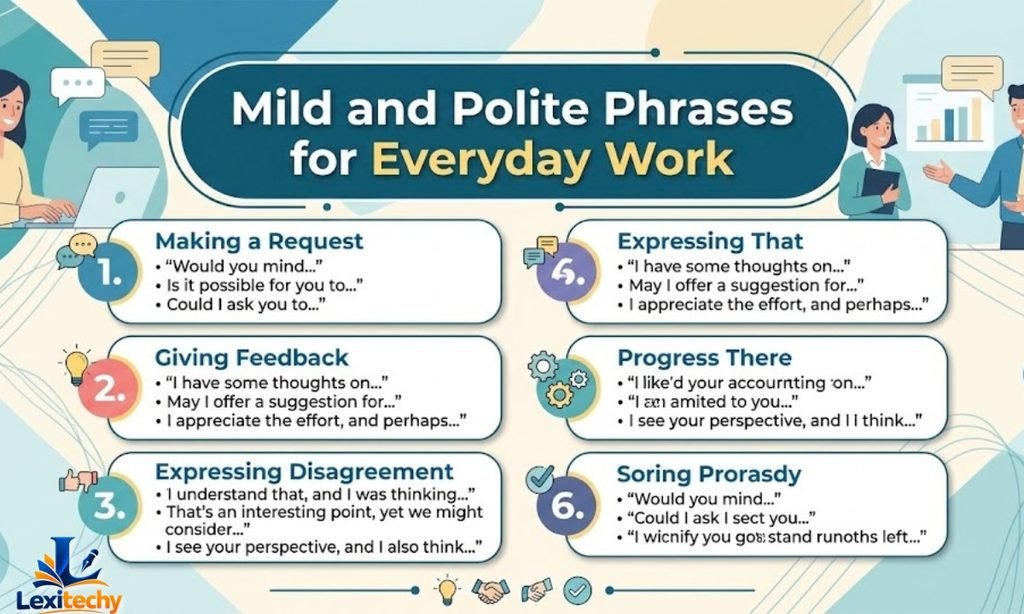
These phrases soften the message. They suit coworkers you know and workplaces with a relaxed tone.
“I’m under the weather”
This is the best-known idiom of the group. It usually points to a mild illness, such as a cold or general tiredness, without naming it. It is friendly and fits most workplaces, but it can understate something serious.
Example: “I’m a bit under the weather, so I’m going to rest this afternoon.”
Similar phrases in this group are “I’m feeling run down,” “I’m not quite myself,” “I’m a little off today,” “I’m out of sorts,” “I’m feeling worn out,” and “I’m not at full strength.” They describe low energy or a sense that something is wrong, more than a clear illness.
Casual Phrases for Friends and Close Coworkers
These are fine in conversation, group chats, and casual social posts. They are usually too informal for a message to a client or a senior leader.
- “I’m feeling rough”
- “I’m feeling lousy”
- “I’m coming down with something”
- “I’ve got a bug”
- “I feel awful”
“I’m coming down with something” has a special job. It means you think you are getting sick but are not fully ill yet, so it works as a gentle warning.
Phrases That Name a Symptom
Sometimes the clearest wording is a specific symptom. These phrases give people a reason they can understand quickly, and they often need no further explanation.
- “I’m running a fever”
- “I have a bad cold”
- “I’m feeling lightheaded”
- “I’m dealing with a migraine”
- “I’m feeling queasy”
Name a symptom only when you are comfortable sharing it. Many workplaces do not expect details.
Phrases for More Serious Illness
When you want to be unmistakably clear, use stronger wording. “I’m too ill to work” and “I’m not well enough to come in” leave little room for doubt about your capacity.
Example: “I’m too ill to work today, but I’ve forwarded the urgent items to Sam.”
Comparison Table: All 28 Synonyms
| Synonym | Meaning Nuance | Tone | Example Sentence |
| I’m unwell | General, neutral statement of poor health | Formal | I’m unwell today and will be offline until tomorrow. |
| I’m not feeling my best | Understated, mild to moderate discomfort | Polite, soft | I’m not feeling my best, so I’ll join the call with my camera off. |
| I’m dealing with a health issue | Vague and private, short or long term | Formal, boundary-setting | I’m dealing with a health issue and will reply when I’m back on Thursday. |
| I’m recovering from an illness | The worst has passed but energy is still low | Neutral | I’m still recovering from an illness, so I’ll ease back in this week. |
| I have a health matter to attend to | Could mean illness or an appointment | Very formal | I have a health matter to attend to and need to leave at noon. |
| I’m out sick today | Plainly reports an absence | Neutral | I’m out sick today. Maya has my open tasks. |
| I’m taking a sick day | Frames the absence as using leave | Neutral | I’m taking a sick day on Friday and have shared my notes. |
| I’m taking a health day | Can cover physical or mental health | Neutral, modern | I’m taking a health day to rest and reset. |
| I’m unable to work today due to illness | Complete and unambiguous | Formal | I’m unable to work today due to illness and will update you in the morning. |
| I’m under the weather | Mild, everyday illness | Warm, lightly informal | I’m a little under the weather, so I may log off early. |
| I’m feeling run down | Tired and low on energy, maybe early illness | Neutral | I’ve felt run down all week and need a quiet evening. |
| I’m not quite myself | Something is off, but unspecified | Soft, personal | I’m not quite myself today, so please bear with me. |
| I’m a little off today | Slightly unwell or low | Casual but polite | I’m a little off today, so I may be slower to respond. |
| I’m out of sorts | Uneasy or unwell, physical or emotional | Polite, a bit traditional | I’m feeling out of sorts, so I’m heading home. |
| I’m feeling worn out | Exhaustion more than illness | Neutral | I’m worn out after a rough week and need to rest. |
| I’m not at full strength | Still able to work, but limited | Professional | I’m not at full strength, so I’ll focus on the urgent items. |
| I’m feeling rough | Noticeably unwell | Casual | I’m feeling rough this morning, so I’m going back to bed. |
| I’m feeling lousy | Clearly unwell, a little dramatic | Casual | I feel lousy, so I’m skipping the gym today. |
| I’m coming down with something | Early signs of illness | Casual, neutral | I think I’m coming down with something, so I’ll keep my distance. |
| I’ve got a bug | Mild infection, usually short | Casual | I’ve got a bug and don’t want to pass it around. |
| I feel awful | Strongly unwell, emotional emphasis | Casual | I feel awful and need to go home. |
| I’m running a fever | Concrete, medical-sounding symptom | Neutral | I’m running a fever, so I can’t come in. |
| I have a bad cold | Specific and familiar illness | Neutral | I have a bad cold and want to avoid spreading it. |
| I’m feeling lightheaded | Dizziness or faintness | Neutral | I’m feeling lightheaded and need to sit down for a bit. |
| I’m dealing with a migraine | Specific condition, often severe | Neutral | I’m dealing with a migraine and can’t look at a screen. |
| I’m feeling queasy | Upset stomach or nausea | Casual to neutral | I’m feeling queasy, so I’m going to skip lunch. |
| I’m too ill to work | Strong, leaves no doubt | Direct | I’m too ill to work today and won’t be checking messages. |
| I’m not well enough to come in | Clear limit on attending in person | Polite, firm | I’m not well enough to come in, but I can join by phone for ten minutes. |
How to Use These Phrases in Different Situations

Keep it short and clear. State that you are unwell, say how long you expect to be out, and mention who covers urgent tasks. A subject line like “Out sick today” does the job.
Conversation
Spoken English tolerates softer, shorter phrases. “I’m a bit under the weather” or “I’m not feeling great” sounds natural, and nobody expects a full explanation.
Social Media
Casual wording fits best. “Coming down with something” or “feeling rough today” tells followers why you are quiet without sharing medical details.
Essays and Formal Writing
Write in the past tense and keep it neutral. “She was unwell for most of the term” sounds more suitable than slang.
Storytelling
Show the feeling instead of only naming it. “He looked out of sorts, pale and quiet” gives a reader more than “he was sick.”
Resumes
A resume does not usually need any of these phrases. If you have a gap, you can keep the explanation brief and general, and only if you choose to give one.
Antonyms
These phrases describe the opposite state:
- I’m feeling well
- I’m feeling fine
- I’m in good health
- I’m feeling great
- I’m full of energy
- I’m back to normal
- I’m feeling much better
Related Words and Phrases
- Ill, sick, unwell: Common one-word alternatives to the phrase itself
- Ailing: Describes someone who is unwell, often over time
- Indisposed: Formal, and can sound stiff in modern writing
- Call in sick: Tell your workplace you cannot come in
- Sick leave: Time off for illness
- Doctor’s note: Written proof from a medical provider
- On the mend: Getting better
- Back on my feet: Recovered enough to resume normal activity
- Get well soon: What people say back to you
When Not to Use These Synonyms
Not every phrase fits every moment. Watch for these mismatches:
- “I’m unwell” in casual chat. It can sound stiff among friends.
- “I’m dealing with a health issue” for a simple cold. It may worry people and invite questions. “I have a bad cold” is calmer.
- “I’m under the weather” for serious illness. It understates the situation and may lead people to expect you back quickly.
- “I’m out of sorts” when you need to be clear. It can mean mood as much as health, so use “unwell” if the illness is physical.
- “I’m coming down with something” when you are already sick. It signals the start of an illness, not the middle of one.
- “I have a health matter to attend to” when you are sick. It can sound like an appointment, so say “unwell” if you are ill.
- “I’m taking a health day” when your workplace uses specific leave terms. Check your policy and use its wording if it matters for records.
- “I feel awful” or “I feel lousy” in client emails. They are too casual for formal business messages.
- Symptom phrases when you want privacy. “I’m running a fever” shares more than “I’m unwell.”
Frequently Asked Questions
Is “I’m not feeling well” professional enough for work?
Yes. It is polite, common, and does not overshare. If you want a more formal tone, “I’m unwell” or “I’m not feeling my best” are good alternatives.
What is a short message I can send my manager?
Something like this works: “I’m unwell today and unable to work. I’ll update you tomorrow, and [name] can cover anything urgent.” It is clear, brief, and responsible.
Do I have to say what is wrong?
Usually not. A general phrase is enough in most workplaces. Share details only if you want to, or if your employer’s policy asks for them.
What is the difference between “unwell” and “under the weather”?
“Unwell” is neutral and formal and can describe any level of illness. “Under the weather” is a friendlier idiom that usually suggests something mild.
Can I say “I’m not feeling well” for mental health reasons?
Yes. The phrase does not specify physical or mental causes. “I’m taking a healthy day” is another general option that fits either one.
Is it “not feeling well” or “not feeling good”?
Both are heard in everyday speech. In formal writing, “well” is the safer choice when talking about health.
What can I say when someone asks “How are you?” and I am not okay?
You can say “Not great, to be honest,” or “A little under the weather.” Both are honest without turning into a long explanation.
Conclusion
“I’m not feeling well” is a perfectly good phrase, but it is not your only option. The best alternative depends on three things: how ill you are, how formal the setting is, and how much you want to share. Formal choices like “I’m unwell” and “I’m dealing with a health issue” protect your privacy. Softer ones like “I’m under the weather” keep the tone friendly.
Keep your message clear and brief, and match the phrase to the person reading it. When you are unsure, a plain statement such as “I’m unwell and unable to work today” is almost always a safe and professional choice.

Emily Carter is an English content writer and SEO specialist with 5 years of experience in creating clear, helpful, and search-friendly content. She writes about grammar, word meanings, synonyms, vocabulary, and everyday English usage. Her goal is to make confusing words and language rules simple, practical, and easy to understand.


Pingback: Verbage or Verbiage? Discover the Correct Word
Pingback: Followup or Follow Up? Discover the Correct Usage